
Insider's Guide · Cuisine
Moroccan Food Guide: 15 Must-Try Dishes & Insider Tips
From the slow-cooked tagines of Fes to the grilled sardines of Essaouira, Moroccan cuisine is one of the most layered in the world — Berber, Arab, Andalusian and French, all in one bite. Here's what to eat, where to eat it, and how to order like a local.
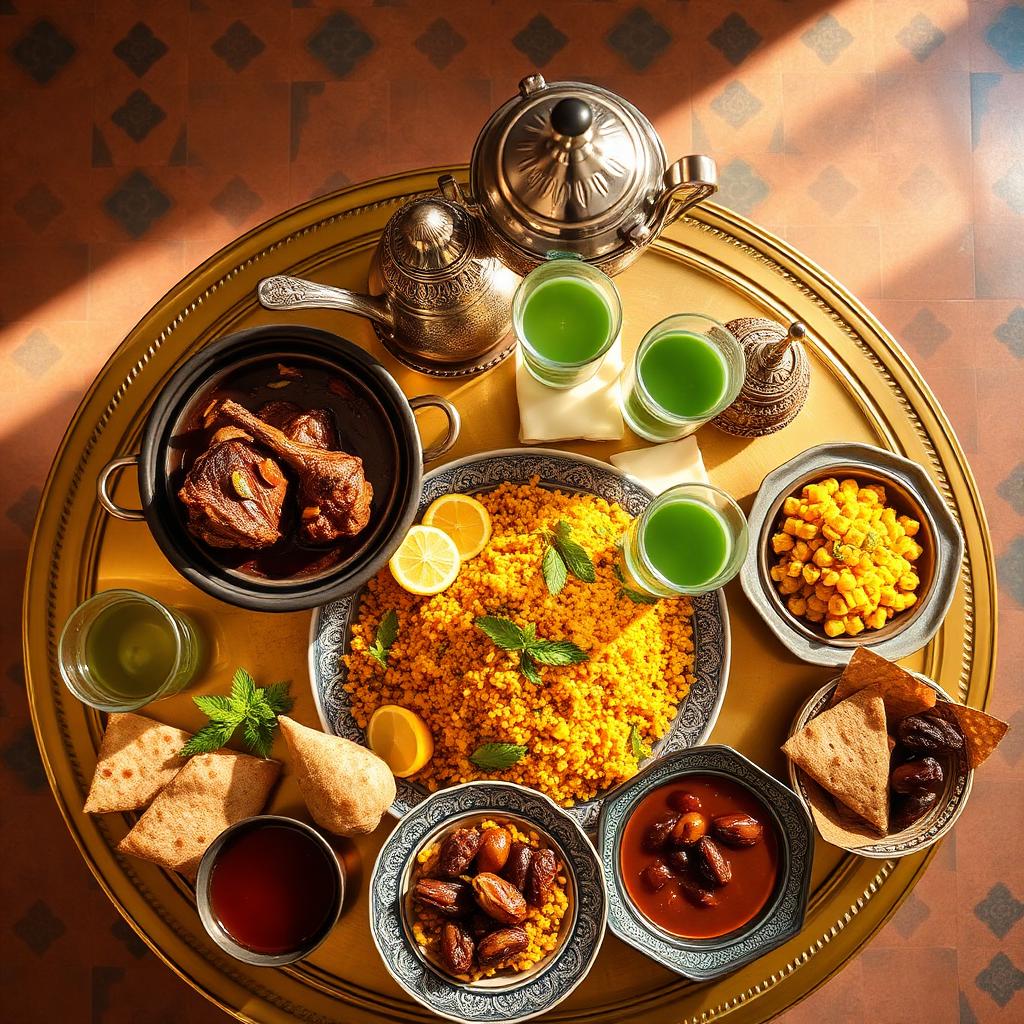
Why Moroccan food is different
Moroccan cooking is defined by slow heat and layered spice. The magic isn't chili heat — it's the interplay of cumin, coriander, saffron, ginger, cinnamon and preserved lemon, built over hours in a sealed clay pot. Every region has its own accent: Fes leans regal and Andalusian, Marrakech is rustic and bold, the Atlas is Berber and hearty, and the Atlantic coast lives on the day's catch.
The 12 dishes to try first
- 01
Tagine
The slow-cooked soul of Morocco
Named after the conical clay pot it's cooked in, tagine is a low-and-slow stew of meat, vegetables and spices. Classic pairings: lamb with prunes and almonds, chicken with preserved lemon and olives, or kefta (meatballs) with egg cracked on top.
Best in: Fes, Marrakech, and mountain guesthouses in the Atlas.
- 02
Couscous
Friday's ritual dish
Steamed three times over broth until impossibly fluffy, then crowned with seven vegetables and slow-braised lamb or chicken. Traditionally shared from a single platter every Friday after prayer.
Best in: Any riad on Friday lunch — book ahead.
- 03
Pastilla (Bastilla)
Sweet-savory pigeon pie
Flaky warqa pastry wrapped around spiced pigeon (or chicken), almonds and egg, then dusted with cinnamon and powdered sugar. The signature dish of Fassi cuisine and unlike anything else in the world.
Best in: Fes — the birthplace of the recipe.
- 04
Harira
The Ramadan soup
A hearty tomato-based soup with lentils, chickpeas, lamb and fresh herbs, thickened with tadouira (a flour-water slurry). Traditionally breaks the fast during Ramadan, served with dates and chebakia.
Best in: Everywhere, especially in winter and during Ramadan.
- 05
Mechoui
Whole roasted lamb
A whole lamb slow-roasted in an underground clay oven until it falls off the bone. Eaten with your hands, dipped in cumin and salt. A celebration dish.
Best in: Mechoui Alley off Jemaa el-Fna, Marrakech.
- 06
Rfissa
Comfort food for new mothers
Shredded msemen or day-old bread soaked in a lentil-and-fenugreek broth with chicken, onions and ras el hanout. Traditionally served to women after childbirth — one of the most soulful dishes in the Moroccan kitchen.
Best in: Home kitchens and traditional Fassi restaurants.
- 07
Tangia
Marrakech's bachelor stew
Not to be confused with tagine. Tangia is lamb, preserved lemon, garlic and cumin sealed in an urn-shaped pot and buried in the hot ashes of a hammam furnace for hours. A Marrakchi specialty.
Best in: Marrakech medina — try the Mouassine district.
- 08
Bissara
Breakfast of the north
A thick, warming soup of split fava beans or peas, blitzed smooth and topped with olive oil, cumin and a dusting of paprika. Costs a few dirhams and fuels the morning.
Best in: Chefchaouen and the Rif region.
- 09
Zaalouk & Taktouka
The essential mezze pair
Zaalouk is a smoky eggplant-and-tomato dip; taktouka is a slow-cooked pepper-and-tomato salad. Served cold with khobz (round bread) at the start of nearly every meal.
Best in: Every proper Moroccan lunch.
- 10
Msemen & Baghrir
The breakfast staples
Msemen is a square, layered flatbread — flaky, buttery, folded over honey or amlou (almond-argan spread). Baghrir is a thousand-hole semolina pancake that soaks up melted butter and honey.
Best in: Any café at breakfast, from Tangier to Agadir.
- 11
Sardines Chermoula
The Atlantic coast on a plate
Fresh sardines marinated in chermoula (garlic, coriander, cumin, paprika, lemon) and grilled or fried until crisp. Morocco is the world's biggest sardine exporter — eat them where they're landed.
Best in: Essaouira and the Atlantic coast.
- 12
Mint Tea
More than a drink — a ceremony
Gunpowder green tea, fresh spearmint and generous sugar, poured from height into small glasses to build a foam crown. Offered on arrival, after every meal, and to seal any conversation.
Best in: Everywhere. Refusing a glass is nearly impossible.
Food etiquette for travelers
- Eat with your right hand. The left is traditionally considered unclean. Bread (khobz) is your utensil — tear a piece and use it to scoop.
- Share from the center. Tagine and couscous are communal. Eat only from the wedge directly in front of you; the host will push the best pieces your way.
- Accept the mint tea. It's poured three times — light, medium, strong. Refusing the first glass is close to refusing hospitality itself.
- Compliment the cook. "Bssaha" (to your health) after the meal is warmly received.
- Tipping. Round up at cafés, ~10% at sit-down restaurants, a few dirhams at street stalls.
Where to eat, by city
- Marrakech — Jemaa el-Fna night stalls for mechoui and grilled skewers; Nomad or Le Jardin for modern takes; Al Fassia for classic Fassi cuisine cooked entirely by women.
- Fes — Dar Roumana for pastilla; the Ruined Garden for garden dining; and any riad kitchen for the real deal.
- Chefchaouen — Café Clock for goat cheese, Bab Ssour for bissara and grilled fish.
- Essaouira — the port grills — pick your fish off the ice, they'll cook it whole.
- Casablanca — La Sqala for a Moroccan classic inside an old fort; Rick's Café for the Casablanca cliché done well.
A three-day culinary itinerary
- Day 1 — Marrakech. Breakfast msemen at a medina café, tangia lunch in Mouassine, mechoui and grilled skewers at Jemaa el-Fna after dark.
- Day 2 — Fes. Pastilla at Dar Roumana, an afternoon spice-market walk in the medina, harira and dates at sunset.
- Day 3 — Essaouira. Sardines chermoula at the port, argan-oil tasting at a women's cooperative outside town, sunset mint tea on the ramparts.
Frequently asked questions
- What is the national dish of Morocco?
- Couscous — traditionally served on Fridays after prayer with seven vegetables and slow-cooked lamb or chicken.
- Is Moroccan food spicy?
- Aromatic, not spicy-hot. Heat comes from harissa, always served on the side.
- Can vegetarians eat well in Morocco?
- Yes — vegetable tagines, zaalouk, taktouka, bissara and lentil harira are everywhere. Ask for "tagine khodra".
- Is it safe to eat street food in Morocco?
- Very — choose busy stalls with high turnover and food cooked to order in front of you.
- Do you tip in Moroccan restaurants?
- Round up at cafés, ~10% at restaurants, a few dirhams at stalls.