The Blue Medina
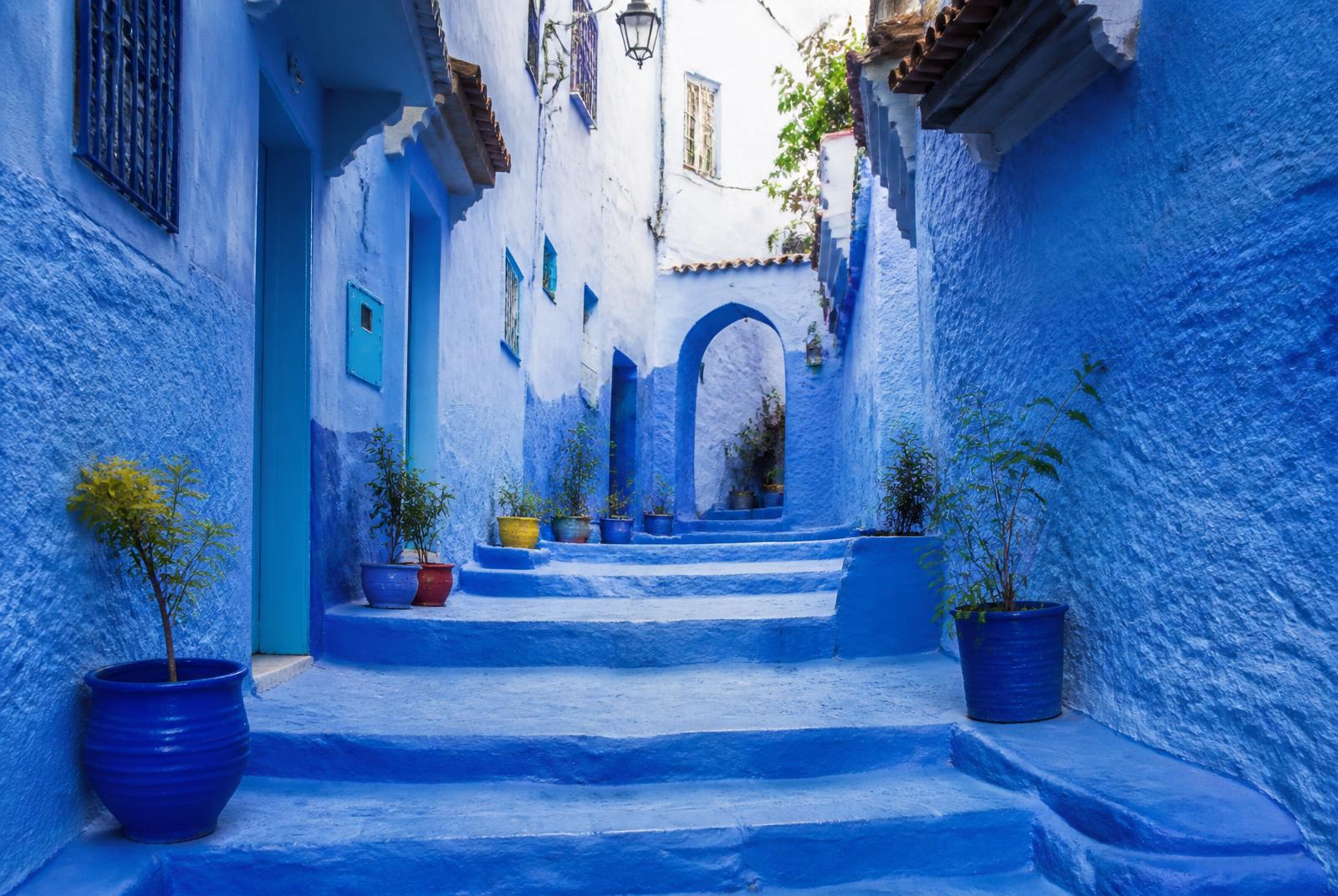
Every alley, staircase and door washed in shades of Majorelle blue.
The Blue Pearl · Tanger-Tétouan-Al Hoceïma
Tucked into the Rif Mountains, Chefchaouen's cobalt-washed medina is one of the most photographed places on earth. Small, walkable and cool in summer, it's the perfect slow-travel stop between Fes and Tangier.
About Chefchaouen
Chefchaouen (or 'Chaouen' to locals) was founded in 1471 as a mountain fortress to shelter Muslim and Jewish refugees fleeing the Spanish Reconquista. That Andalusian heritage still shapes the town — in the whitewashed lower medina, the tiled fountains, the Spanish signage, and the gentler pace that sets Chaouen apart from Morocco's imperial cities.
Perched at 600m in the Rif Mountains, the town is small enough to walk end-to-end in under an hour, yet rewards travellers who linger. Beyond the famous blue walls lie honey-scented artisan bakeries, wool-weaving cooperatives, and mountain trails that thread into one of Morocco's least-visited national parks.
Why visit
What to see
Every alley, staircase and door washed in shades of Majorelle blue.
The main square with its 15th-century kasbah, gardens and ethnographic museum.
Where the medina meets the mountain — locals wash rugs in the cold spring water.
A 30-minute climb rewarded with the best sunset over the blue city.
Where to sleep
Things to do
Local experiences
A gentle 30-minute walk up from the medina rewards you with the classic panorama of the blue town glowing beneath the Rif ridgeline.
The Jbala hills produce Morocco's best goat cheese; small dairies near the Ras El Maa spring offer tastings alongside wild-mountain honey.
Watch traditional Rif kilims come off the loom at the women-run Association Akchour, with fair-trade blankets and scarves to take home.
A 12 km round trip through cedar forest to a turquoise natural pool — the most beautiful day-hike in northern Morocco.
Travel tips
Verified, hand-picked and ready to book.
FAQ
There's no airport. Most travellers arrive by private transfer or bus from Fes (4h) or Tangier (2.5h).
Two nights is ideal — one full day for the medina and one for a hike or the Akchour waterfalls.
The most repeated explanation is that Jewish refugees who arrived in the 1930s painted the walls blue as a symbol of the sky and heaven. Locals maintain the tradition — it also cools the walls and is said to repel mosquitoes.
Stay at least one night. The tour buses leave by late afternoon and the medina transforms — quiet blue lanes, cats on doorsteps, and the best light for photography at sunrise and sunset.
Yes — the Akchour waterfalls and God's Bridge (Pont de Dieu) are a beautiful 5–6 hour round trip. Talassemtane National Park has longer multi-day routes with local guides.